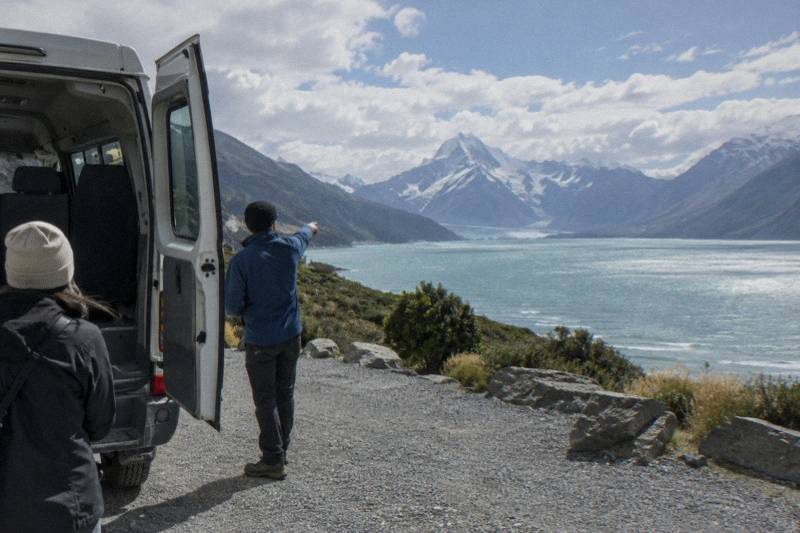
Is The Tasman Glacier Boat Trip Suitable For Limited Mobility?
An honest look at what the Glacier Explorers boat trip on Tasman Lake demands of your legs, what the operator requires, and easier ways to see the glacier at Aoraki / Mount Cook.
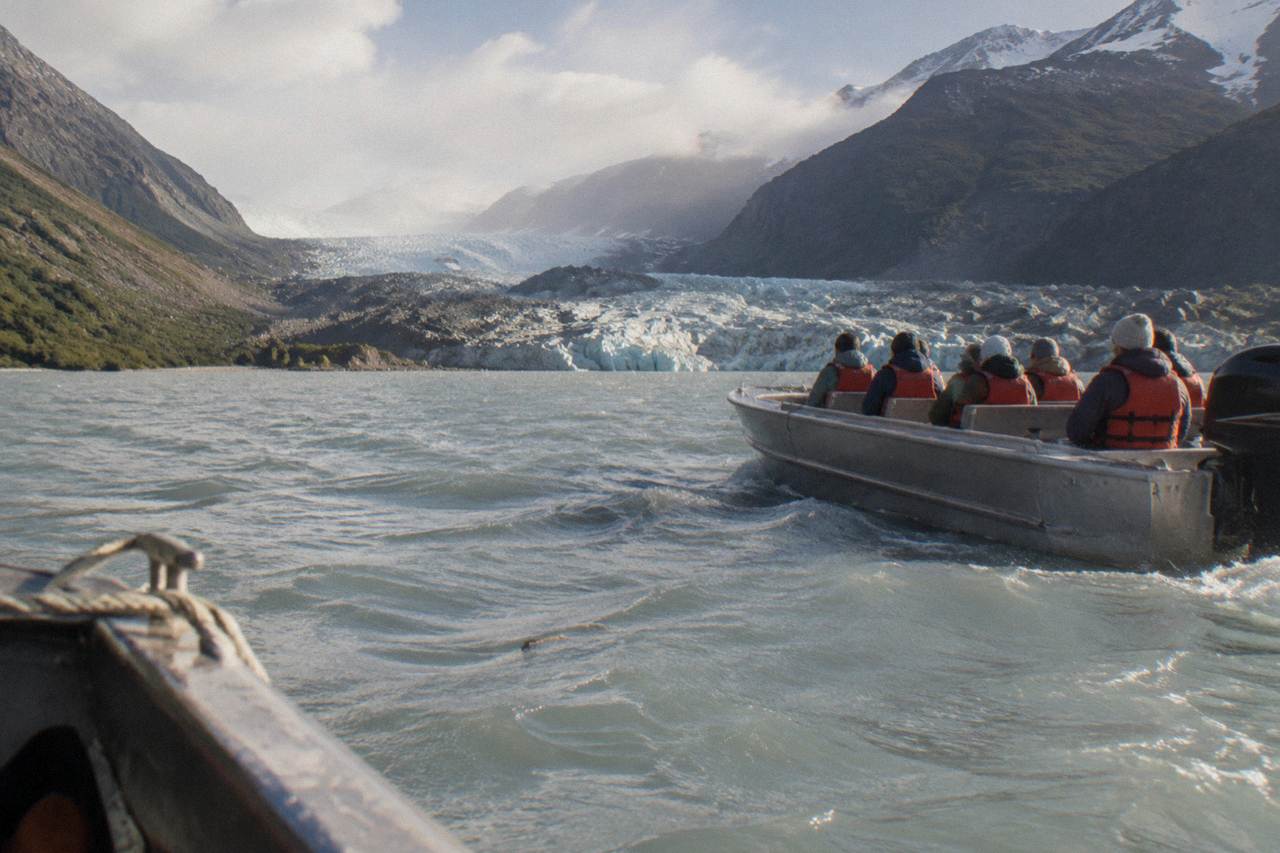
Not as it stands, and nobody should tell you otherwise. Glacier Explorers, the operator that runs the boat trip on Tasman Lake, requires every guest to walk 1.5 km each way to the lake edge within 25 minutes, over a track with small hills, an uneven surface, loose rocks and a relatively steep slope at the end. The operator publishes no wheelchair information and no mobility provisions. The honest position: read the walking facts below, then phone or email the operator directly with your specific needs before booking anything. If the walk sounds manageable, the full guide to the Tasman Glacier boat cruise covers what the trip costs, how long it lasts, and how to get there.
That paragraph is the heart of this article, but the detail around it matters too. The boat trip is genuinely one of the most remarkable ways to meet a glacier in this country: about an hour on a lake that did not exist until 1974, below the longest glacier in New Zealand, with icebergs a bonus rather than a promise. Tasman Glacier runs 23 km, up to 3 km wide, and its lower reaches are rock-covered, and Tasman Lake has formed as it retreats. None of that scenery forgives the walk, though. The walk comes first, and it is not optional.
It also matters because the boat is not sold as part of any day trip. Every Mount Cook day tour covered here travels to Aoraki / Mount Cook under its own steam, and the boat is booked separately, directly with the operator, by phone or email. If a day tour plus the boat is the plan, the timing sums have to work for your legs as well as the clock.
For a reader weighing mobility, there are three separate questions hiding inside the headline one. Can you manage the walk the operator insists on? If not, is there another way to see Tasman Glacier and its lake? And if you still want to travel to Aoraki / Mount Cook, which day trips make the day gentlest? The rest of this article takes them in that order, using only what the operator and the Department of Conservation actually publish.
Is The Tasman Lake Boat Trip Suitable For Limited Mobility?
The tour is generally not suitable for limited mobility, because the operator requires every guest to be fit and able to walk the 1.5 km to and from the lake edge in 25 minutes each way. If you cannot manage that distance and pace comfortably, this boat tour is unlikely to work for you. The track crosses the National Park with small hills up and down, an uneven surface, loose rocks, and a relatively steep slope down to the lake at the end. There is no wheelchair or mobility information on the operator's pages, no accessibility claim of any kind, and no shortcut that skips the walk. Anyone who cannot reliably manage that track in that time should treat the boat trip as unsuitable and plan around it.
Start with the mechanics of the day, because they explain why the requirement is firm rather than advisory. You check in at the Activities Centre on the ground floor of the Hermitage Hotel, 30 minutes before departure. A bus takes the group from the Hermitage to the Tasman Valley. At the Blue Lakes car park everyone gets off and walks: 1.5 km through the National Park, roughly 25 minutes each way, to reach the Tasman Lake jetty where the boat waits. The whole experience runs about 2 hours 45 minutes including transfers, the walk and around one hour on the lake. The walk is the toll for the lake. For the full rundown of where the boat trip begins and ends, see the complete guide to the Glacier Explorers meeting point.
The 25-minute figure deserves emphasis. It is not a gentle average the operator suggested in passing; it is the stated fitness rule, and the relatively steep slope at the lake end becomes a climb on the way back. Coming back, the relatively steep slope at the end of the track is climbed rather than descended. Anyone whose knees, hips, lungs or balance struggle on loose rock and uneven ground will feel this track twice, once down and once up.
| What the boat trip involves | The published detail |
|---|---|
| Walking requirement | 1.5 km each way, completed in about 25 minutes each way |
| Track surface | Small hills, uneven surface, loose rocks, steep slope at the lake end |
| Time on the lake | About one hour |
| Total duration | About 2 hours 45 minutes including transfers and the walk |
| Check-in | 30 minutes before departure, Activities Centre, Hermitage Hotel |
| Minimum age | 4 years, adults priced from 15 |
| Mobility provisions published | None |
| Price | From NZ$219 adult, from NZ$99 child, family pass from NZ$576 |
The prices in that table belong to the operator and are shown in New Zealand dollars exactly as the operator publishes them. The empty row is the honest one. Where a question has no published answer, the right move is to ask the operator directly by phone or email, which is also the only way the boat can be booked. Ask specifically: can the 25-minute walking pace be relaxed, is there any assistance on the track, and what happens to the booking if the answer is no. The operator offers an alternative trip time or a full refund when the Head Guide cancels a trip for weather or lake conditions, so read the cancellation terms before you book rather than after.
One more honest note on the lake itself. DOC warns that Tasman Lake and the surrounding moraine walls have serious hazards for anyone exploring beyond the viewpoint, which is precisely why independent access is not the alternative to the boat. The boat is the supervised way onto the water; the walk is the supervised way to the boat.
How Hard Is The Walk To Tasman Lake Really?
The walk to Tasman Lake is harder than its short length suggests: this is a genuine alpine track, rough underfoot rather than a smooth stroll, and because it must be completed twice, out and back, you should allow about 25 minutes per leg. DOC's description of the terrain in this valley, and the operator's own fitness wording, agree on the character: small hills, uneven ground, loose rock and a relatively steep final slope to the lake edge. Nothing about the walk is described as easy, flat or wheelchair friendly, and no source claims otherwise.
To picture it, start from the Blue Lakes car park, roughly a 10-minute drive from Aoraki / Mount Cook Village. The track crosses the valley floor, rising and dipping as it goes. Underfoot it is the debris of a retreating glacier: gravel, loose stones, and rock that shifts underfoot, all of it unforgiving on a walking stick with a worn tip or on a hip that distrusts uneven ground. The final descent to the lake is the steepest section, and the operator's phrase "relatively steep" is doing honest work there.
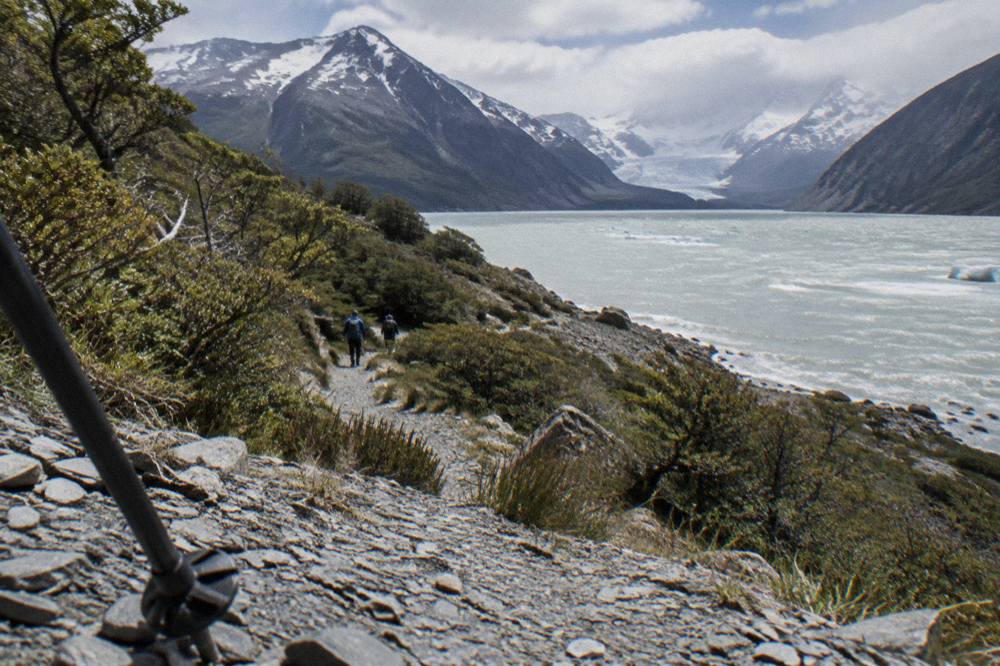
The return leg reverses everything, so the steep section becomes a climb and the hills that were dips become rises, this time with tired legs and whatever the weather has turned into. That is the real reason the 25-minute rule exists: the group, the guide and the boat are all committed to the schedule, and the operator has to know every guest can keep it in both directions. It is also why the operator recommends warm layers and sturdy walking shoes for uneven terrain; trainers with soft soles make loose rock harder, not easier.
What the walk is not, is the Tasman Glacier View Track. That is a different walk entirely, reached from the same car park, with steps and a viewpoint rather than a lake jetty. The two get confused constantly because both start near the Blue Lakes, and the confusion matters here: someone told the View Track is doable may wrongly assume the boat walk is similar. It is not, and the next section separates them properly.
For context on what limited mobility means in this valley, the Tasman Valley car park has no marked mobility spaces, according to DOC's own page for the area, and its toilets close in winter. The infrastructure around even the easiest options here is basic, which is worth knowing before the walk itself is even discussed.
What Are The Easier Ways To See Tasman Glacier At Aoraki / Mount Cook?
The easiest way to see the Tasman Glacier at Aoraki / Mount Cook is the Tasman Glacier View Track, the gentlest published option in the area. It covers 1.5 km return in about 30 minutes, climbing 300-plus steps to a viewpoint over the lake and the glacier beyond. DOC rates it easy to intermediate with a short, steep climb, and it needs no booking. For anyone who finds steps unsuitable, the Tasman Lake and River Track from the same area runs 2.5 km return in about 50 minutes and reaches lake views without the stair climb. Neither track is claimed to be wheelchair friendly, but both are far shorter commitments than the boat walk. Families asking a similar question about younger visitors will find the guide to Mount Cook day tours with kids covers the same viewpoint walk and the boat tour's minimum age.
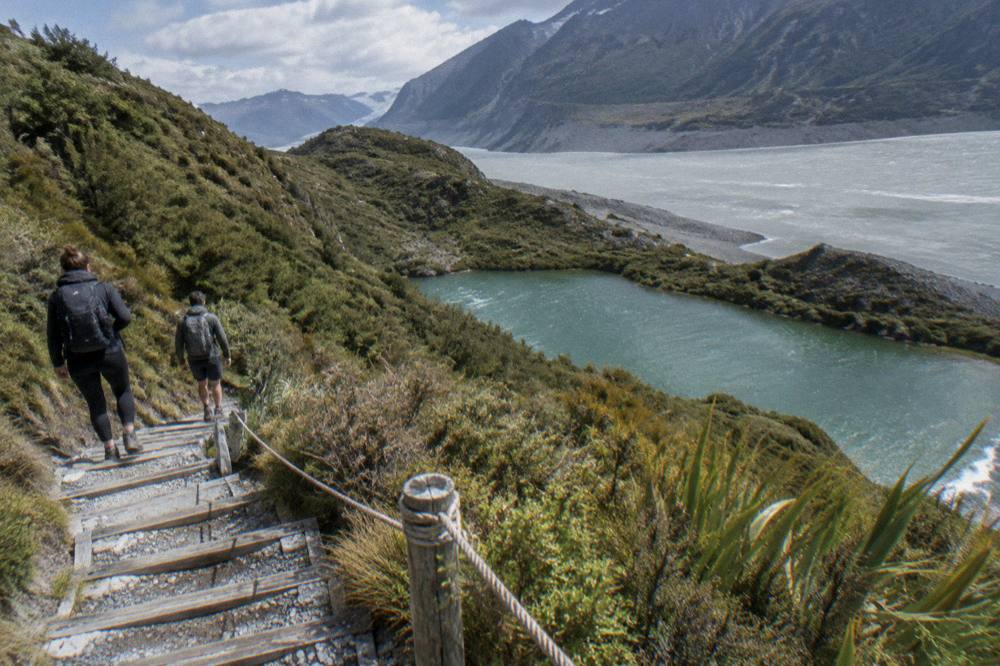
The View Track deserves its reputation as the compromise. Ten minutes of steps brings you to the first of the Blue Lakes, which DOC notes once looked blue but are now fed by rainwater and look green. Another five minutes up reaches the viewpoint, where Tasman Lake spreads out below with the glacier at its far end, and with icebergs on the lake in summer and lake ice in winter. The view is distant rather than intimate, but the glacier, the lake and the ice are all genuinely there, seen from a solid viewpoint rather than a boat deck.
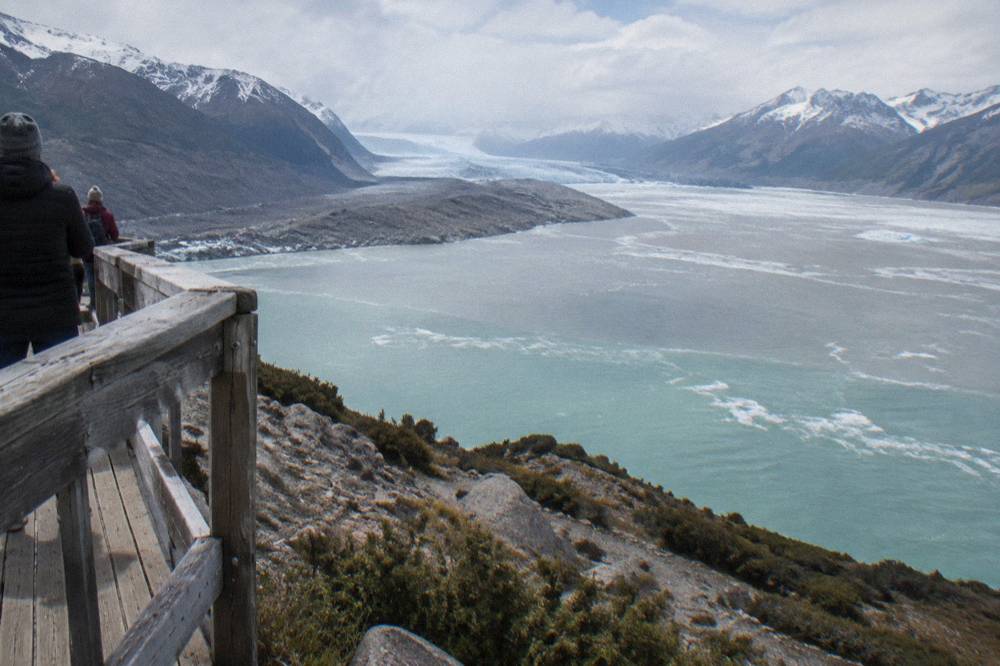
The choice between the two tracks comes down to steps versus distance. The View Track packs its effort into 300-plus steps; the Tasman Lake and River Track spreads the effort over a longer, gentler route. DOC publishes full details of both on its Tasman Glacier View Track page, and the general park guidance, including the serious-hazard warning for the lake and moraine walls, sits on the DOC Aoraki / Mount Cook National Park page.
| Option at the Tasman valley | Distance | Time | Terrain character | Booking |
|---|---|---|---|---|
| Glacier Explorers boat walk | 1.5 km each way | 25 minutes per leg, twice | Hills, loose rock, steep slope at the end | Direct with the operator, phone or email |
| Tasman Glacier View Track | 1.5 km return | 30 minutes return | 300-plus steps, short steep climb, viewpoint | None |
| Tasman Lake and River Track | 2.5 km return | 50 minutes return | Longer but avoids the steps | None |
A caution against over-reading that table. DOC calls the View Track easy to intermediate, not easy, and "large tour groups use the track" in summer, so it is busy as well as stepped. The operator's boat walk sits in a different category again, because it ends at a jetty the boat departs from, on a schedule. Three options, three honest labels: none of them is flat, none is claimed wheelchair friendly, and the gentlest of the three is still a hill walk on gravel.
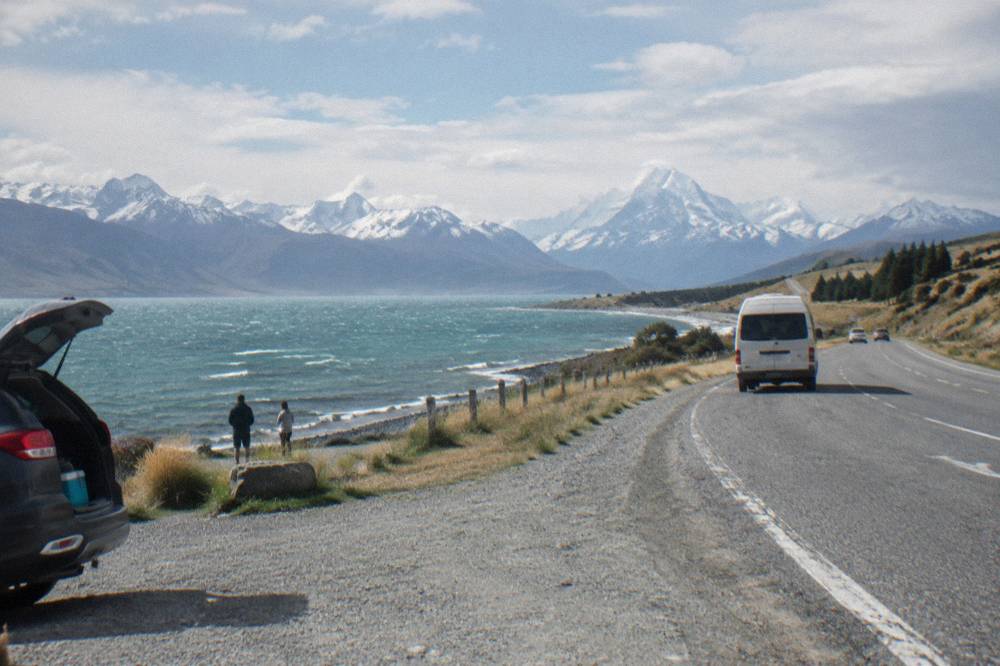
The glacier itself can also be seen without any track at all. DOC notes the lower Tasman Glacier is clearly visible from the main highway at the entrance of the park. For a traveller whose walking is genuinely limited, that roadside view, plus the View Track if steps are manageable, adds up to a real glacier day without the jetty.
Which Mount Cook Day Trips Work At A Slower Pace?
Among the Christchurch day tours, the 13-hour Mount Cook and Lake Tekapo tour from NZ South Island Tours & Travel, from $144 per person and rated 4.8 across 658 reviews, is the gentlest fit, with hotel pickup, lunch included and 150 minutes of free time at Mount Cook in which you choose your own walking. Free time is the key phrase for mobility: on these tours nobody marches you up a track. The guided part happens on the bus, and the walks in the national park are self-guided, so the day can be as easy as the visitor centre and a lake shore.
That tour, covered in detail on the Tasman Glacier Boat Tour guide to the Christchurch day tour, includes a packed lunch ordered at booking, bottled water, Wi-Fi on board, and the Tasman Glacier viewpoint walk as an option during the free time. Option is the operative word. A traveller who skips the viewpoint walk and photographs Lake Pukaki from the stops instead has still had the whole day. The Christchurch departure guide compares all the options from that city.
Two close alternatives share the same shape. The Cheeky Kea Tours version, from $152 per person and rated 4.7 across 467 reviews, also runs 13 hours with hotel pickup, lunch included and 150 minutes at Mount Cook, with the viewpoint walk listed as an option. The Cheeky Kiwi Travel small-group tour, from $169.83 per person and rated 4.8 across 252 reviews, runs 13 hours with lunch and hotel pickup as well. All three are free-cancellation up to 24 hours before start, which matters when mobility or weather makes a long day uncertain.
| Christchurch day trip | Duration | Free time at Mount Cook | Lunch | Pickup | Price from (USD) |
|---|---|---|---|---|---|
| NZ South Island Tours & Travel | 13 hours | 150 minutes | Yes | Hotel | $144 |
| Cheeky Kea Tours | 13 hours | 150 minutes | Yes | Hotel | $152 |
| Cheeky Kiwi Travel small group | 13 hours | Not published | Yes | Hotel | $169.83 |
Every day trip here is exactly that, a day trip, and none includes the boat. That is worth repeating in a mobility context, because a day tour that markets Mount Cook can sound like it delivers the glacier experience outright. What it delivers is the park, the village and the views; the boat, if you can take it, is a separate booking with the operator and a separate 2 hours 45 minutes.
A gentler still alternative exists for travellers based near Lake Tekapo. The Tekapo Shuttle day tour, from $94 per person and rated 4.8 across 441 reviews, runs a shorter 8.5-hour day from Lake Tekapo with the Tasman Glacier viewpoint walk on its itinerary, and the short carbon-neutral Cheeky Kea tour from Tekapo, from $152 per person and rated 4.4 across 58 reviews, packs lunch and 150 minutes at Mount Cook into just 5 hours. Shorter total days mean less time on a bus, which for stiff joints is its own kindness.
Does Any Day Trip Leave Time For The Boat Trip Too?
On paper, only one: the Altitude Tours small-group day tour from Queenstown, from $160 per person and rated 4.7 across 310 reviews, with 210 minutes of free time at Mount Cook Village against the boat's roughly 195 minutes of check-in and trip time. Even there, the arithmetic is tight enough that the timing has to be checked with both the day tour operator and the boat operator before either is booked. Every other published free-time figure, 150 minutes on most tours and 120 on the Wanaka departure, is shorter than the boat needs, so the boat does not realistically fit inside those days.
The mobility angle sharpens this. Even a traveller who could manage the boat walk might balk at bolting a 2 hours 45 minute boat trip onto an up-to-12-hour day that begins with hours of driving from Queenstown, and DOC puts that drive at around 3.5 hours each way. Add the 25-minute-per-leg track at both ends of the boat, and the day becomes a serious physical commitment. The Queenstown day trip guide works through the sums in full.
The Queenstown tour itself is not named for the boat. Its listing points to the boat only as an optional activity during the free time, and it includes admission to the Sir Edmund Hillary Alpine Centre, which is, usefully for this article, an indoor, seated way to spend part of any Mount Cook afternoon. A day built around the alpine centre, the village, and lake-shore views is a legitimate slow-paced day in this park.
“Beautiful in every season. Fall adds another layer of natural beauty with the tree leaf colors changing. Be ready for any kind of weather. Go with flexibility in mind, the trip may be different if the weather changes which it often does.”
What Should You Ask The Operator Before Booking?
Ask Glacier Explorers, by phone or email, three things: whether your specific mobility level can meet the 25-minute walking rule, what assistance if any exists on the track, and the exact cancellation terms if the answer turns out to be no on the day. The operator takes bookings only by phone or email, so the conversation has to happen anyway. Put the questions in writing if a written answer would help you decide, and keep it.
Details make the conversation useful. Describe the walker honestly: distance comfortable on gravel, ability on slopes, whether a stick or frame is used, and pace on uneven ground. Ask whether a companion can set a slower pace, whether the departure time of day matters for track conditions, and what the refund position is if you start the walk and cannot finish. The published weather policy is generous, an alternative trip time or a full refund when the Head Guide cancels for weather or lake conditions, but a personal withdrawal mid-walk is a different question, and it deserves a direct answer before any money changes hands.
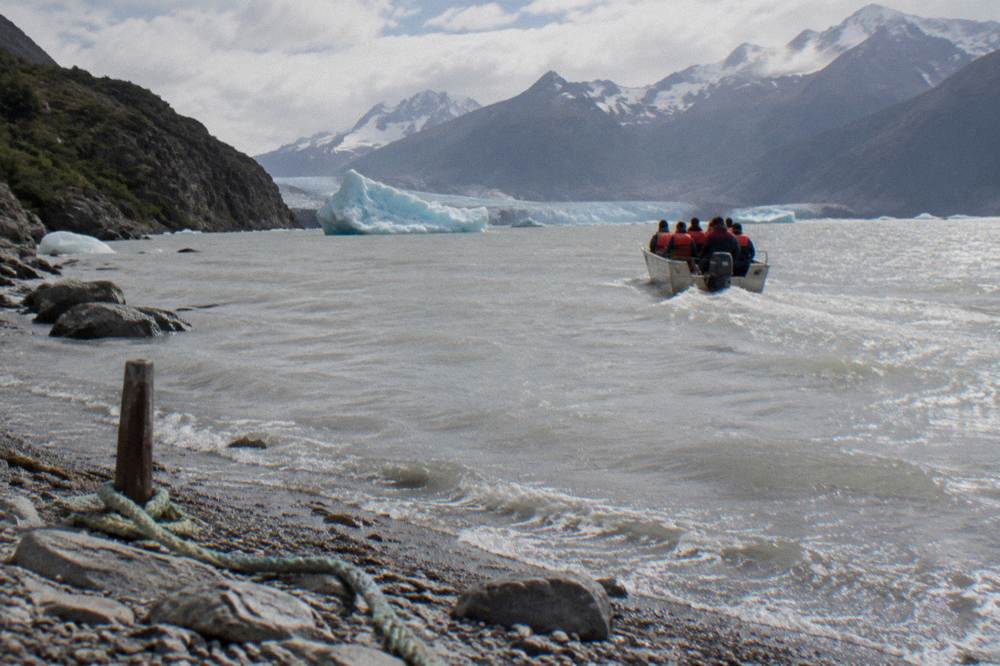
The Glacier Explorers page carries the current prices, from NZ$219 for adults aged 15 and over, from NZ$99 for children aged 4 to 14, and a family pass from NZ$576 for two adults and two children, alongside the booking contact details. Season matters too: winter lake ice can close the boat, so check winter dates with the operator in the season guide before planning a winter trip.
One thing not to ask for is a guarantee of icebergs. The operator says plainly that icebergs, calvings and rollovers cannot be guaranteed, though conditions permitting, guides often retrieve glacier ice from the lake so guests can see and handle it. A boat trip chosen for mobility reasons should be chosen for the lake and the glacier landscape, with ice as the bonus the operator calls it.
Where Can You Check Conditions At Aoraki / Mount Cook Before Travelling?
Check three official sources: the Hermitage's live webcam for lake and weather conditions, the MetService mountain forecast for Aoraki / Mount Cook, and the NZTA journey page for the highway into the park, since snow can close the road from June to September. Conditions decide both the boat and the walks, and a mobility-limited traveller has the least margin for a day that turns bad halfway through.
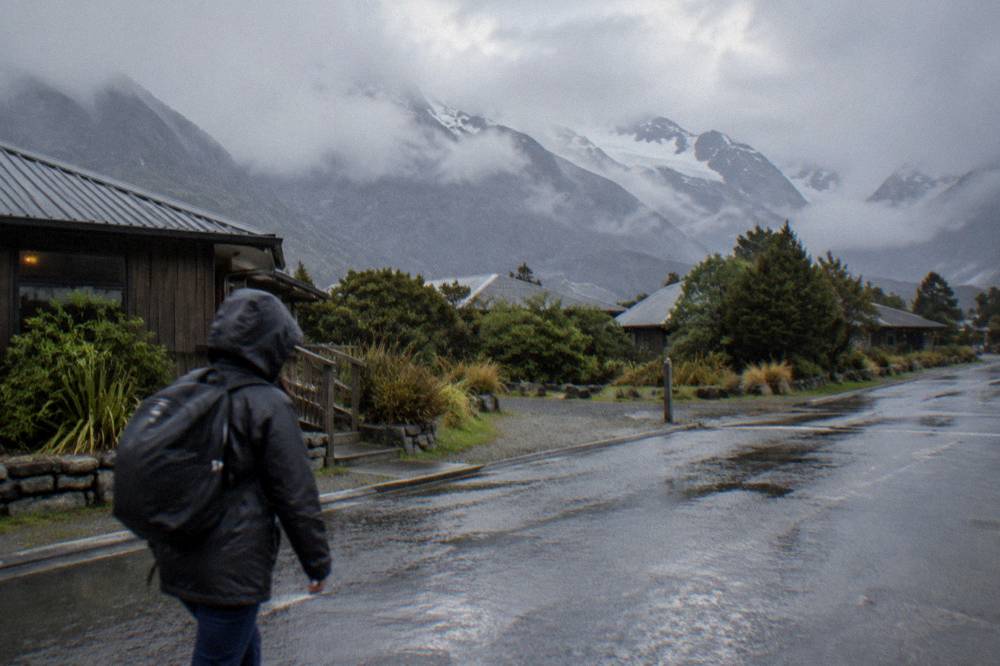
The webcam is the quiet star here. Looking at the lake and the weather from a phone, the morning of a trip or the day before, answers more than any forecast can about whether ice is on the lake and whether cloud sits on the peaks, and the live webcam page is public. Pair it with the MetService Aoraki / Mount Cook forecast for the trend, and the highway conditions page for the road in, because a closed road ends every plan in the valley at once.
Two practical notes round out the preparation. The village has a self-service fuel pump, card only, and no shops or convenience stores, so arrive fuelled and supplied; and the Hermitage FAQ's drive-time guidance, roughly 4 hours 15 minutes from Christchurch and 3 hours 15 to 3 hours 30 from Queenstown, is a reminder of how remote this valley is. For a slower traveller, arriving the night before rather than day-tripping in is often the single best accessibility decision available, and the where to stay near the boat trip guide covers the village options.
Common Questions About Accessibility Of The Tasman Glacier Boat Trip
Is The Tasman Glacier Boat Tour Suitable For Limited Mobility?
Only if you can walk 1.5 km each way over uneven, loose ground in about 25 minutes per leg, including a relatively steep slope at the lake end. The operator publishes no wheelchair or mobility provisions, so ask directly by phone or email before booking.
Can You Do The Boat Tour With A Wheelchair?
No source supports that. The operator requires the 1.5 km alpine walk to the lake jetty within 25 minutes each way, and publishes no wheelchair information at all. Treat it as not possible until the operator says otherwise in writing.
Is There An Easier Walk To See Tasman Glacier?
Yes. The Tasman Glacier View Track is 1.5 km return in about 30 minutes with 300-plus steps to a viewpoint over the lake and glacier, and needs no booking. The Tasman Lake and River Track, 2.5 km return in about 50 minutes, avoids most of the steps.
Can You See Tasman Glacier Without Walking At All?
Yes, partially. DOC notes the lower glacier is clearly visible from the main highway at the park entrance, and day tours stop at lookouts over Lake Pukaki and the village. The views are distant, but real and free of any track.
Does A Mount Cook Day Trip Include The Boat Trip?
No day trip includes the Glacier Explorers boat. The boat is booked separately and directly with the operator by phone or email, and only one day tour from Queenstown leaves enough free time on paper, 210 minutes against the roughly 195 minutes the boat needs door to door.
What Happens If The Boat Trip Is Cancelled For Weather?
The operator's Head Guide decides just before each trip, and an alternative trip time or a full refund is offered when a trip is cancelled for weather or lake conditions. Read the full cancellation terms when booking, especially for a withdrawal for mobility reasons.