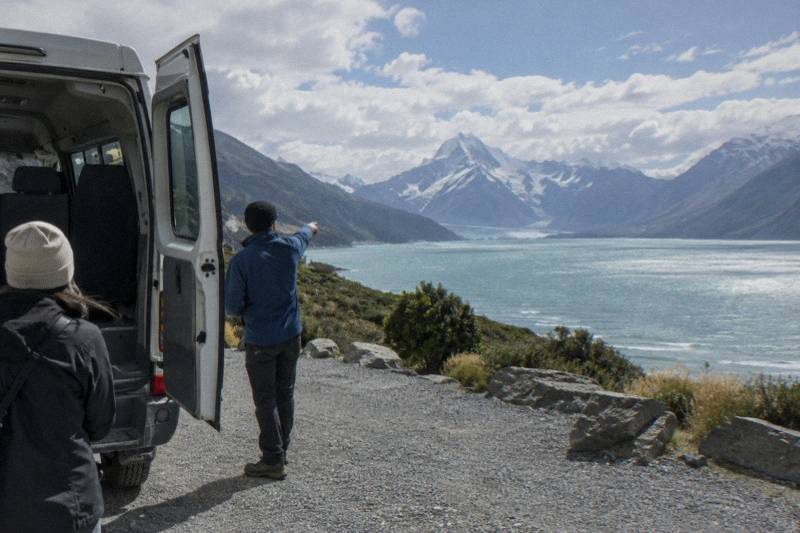
What Should I Pack For A Mount Cook Day Trip?
A practical packing list for a Mount Cook day trip: layers, sturdy shoes, waterproofs, what the tours already provide, and what the glacier boat trip adds to the bag.
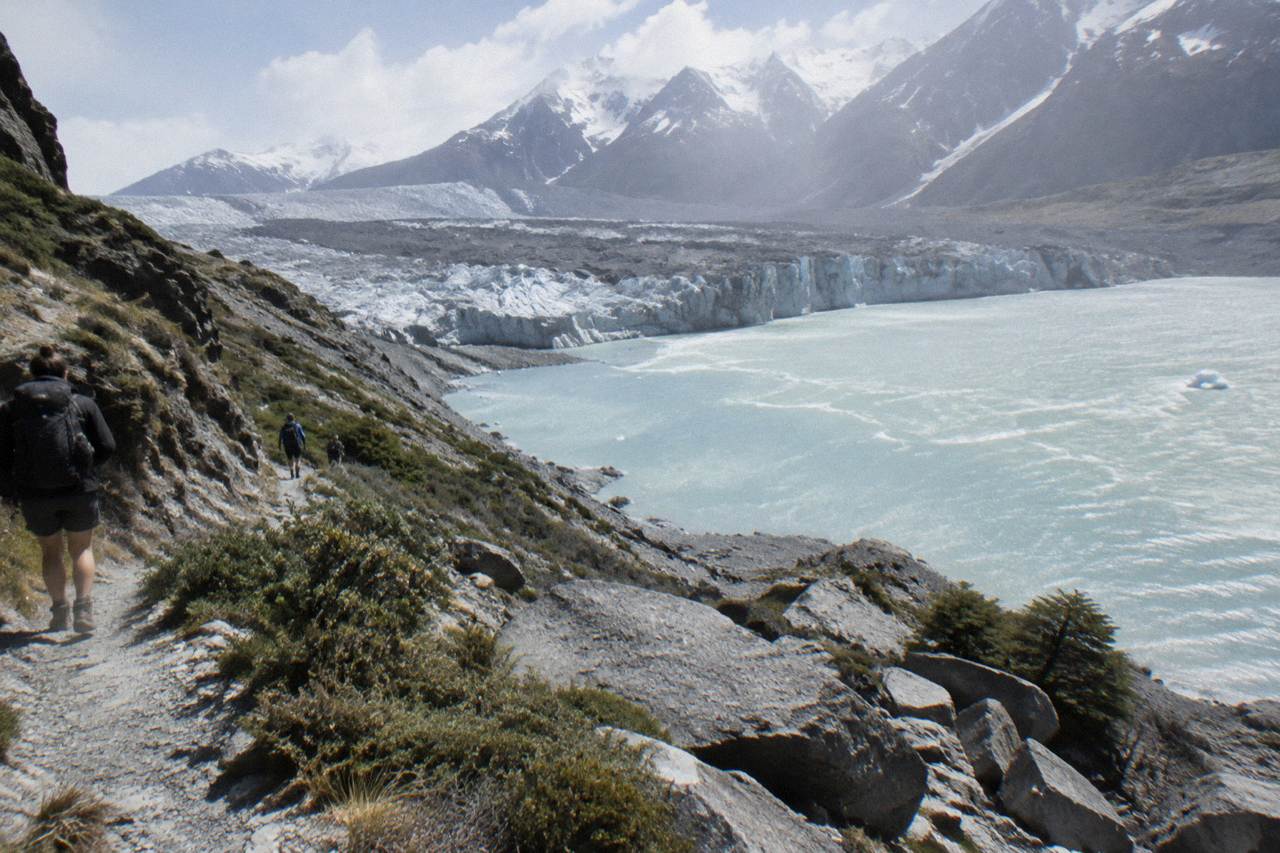
Pack for a long day in alpine conditions: warm layers, sturdy walking shoes, a waterproof jacket, sunglasses and sunscreen, plus a water bottle and any food the tour does not already provide. Most day trips last 8.5 to 14 hours, and the weather at Aoraki / Mount Cook can shift from sun to sleet inside an hour, so the bag should handle both. A small daypack is enough. Every tour covered here travels by minibus or van with storage, so there is no need to check anything in, but there is also no shop at the village beyond a limited cafe and a hotel retail store, so whatever is needed has to come in the bag. The packing question breaks into a handful of smaller ones, and this article works through each in order: clothes, footwear, the boat trip's extra rules, food and drink, and the odds and ends that get forgotten.
The starting point is the day itself. Christchurch departures spend about 13 hours door to door, with roughly 150 minutes of free time at Mount Cook on the tours that state a figure. Queenstown departures run up to 12 or 13 hours. The shortest option covered here, a Tekapo departure of 5 hours, still leaves 150 minutes in the park. That free time is walking time for most visitors, either to a viewpoint over Tasman Lake, along the Hooker Valley, or around the village, and walking in this park means uneven ground, steps and wind. Packing for sitting on a bus is easy; packing for two hours on a moraine ridge in a southerly change is the actual job.
Weather drives everything. The Department of Conservation notes that road access to the park can be limited by snow between June and September, and the mountain weather is famously changeable at any time of year, which is why the layering advice below leans conservative. A good reference before departure day is the MetService mountain forecast for Aoraki / Mount Cook, checked the night before and again in the morning, since a forecast of wind or rain changes what goes in the bag more than any other single factor.
What Clothes Work For A Day In The Park?
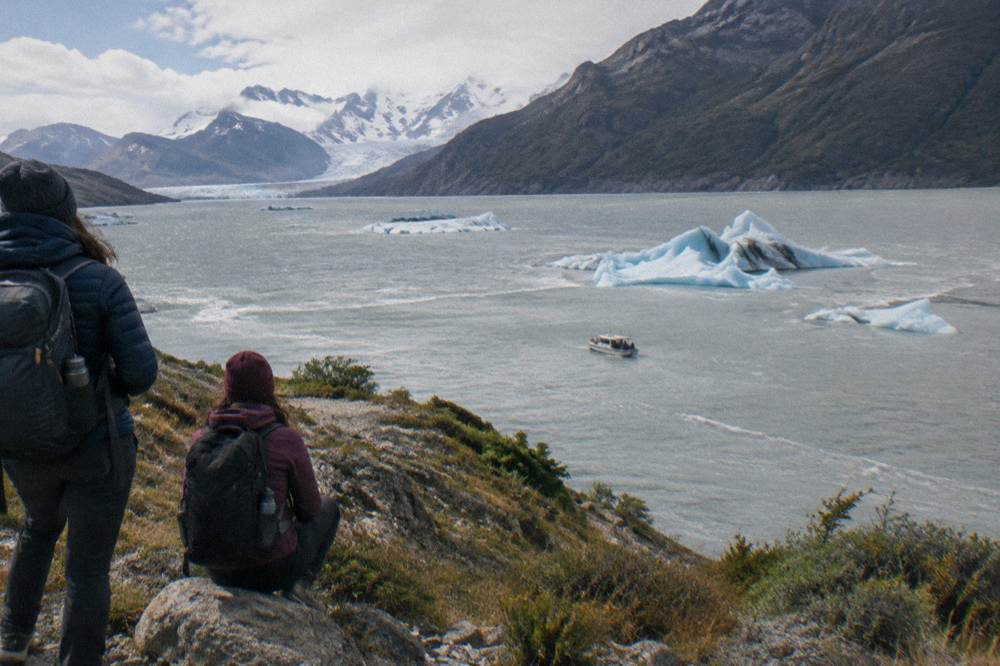
Bring three warm layers plus a waterproof shell, and dress so each layer can come off independently: a merino or synthetic base layer, a fleece or insulated mid layer, and a wind-and-waterproof outer jacket. Long trousers beat shorts even in summer, because the wind off the lake and glacier is cold in every month, and a warm hat and gloves take almost no space. The classic mistake on these tours is dressing for the departure city. Christchurch, Queenstown and Tekapo can be mild when a day tour sets out, while the village is much colder and blowing, so the bag, not the outfit at the bus door, is the real wardrobe.
The layering logic is simple. The morning stops, Lake Tekapo or Lake Pukaki lookouts, are usually calm and sunny enough for a t-shirt. The afternoon at Mount Cook, surrounded by 3,000-metre peaks including Aoraki / Mount Cook at 3,724 metres, is a different climate. Mountain weather here changes fast. Three layers means a base layer for the bus, base plus fleece for the viewpoints, and everything plus the shell for the walks, with the shell doing double duty against both rain and wind. A down or synthetic insulated jacket is worth its weight from April to October and is rarely a mistake even in January.
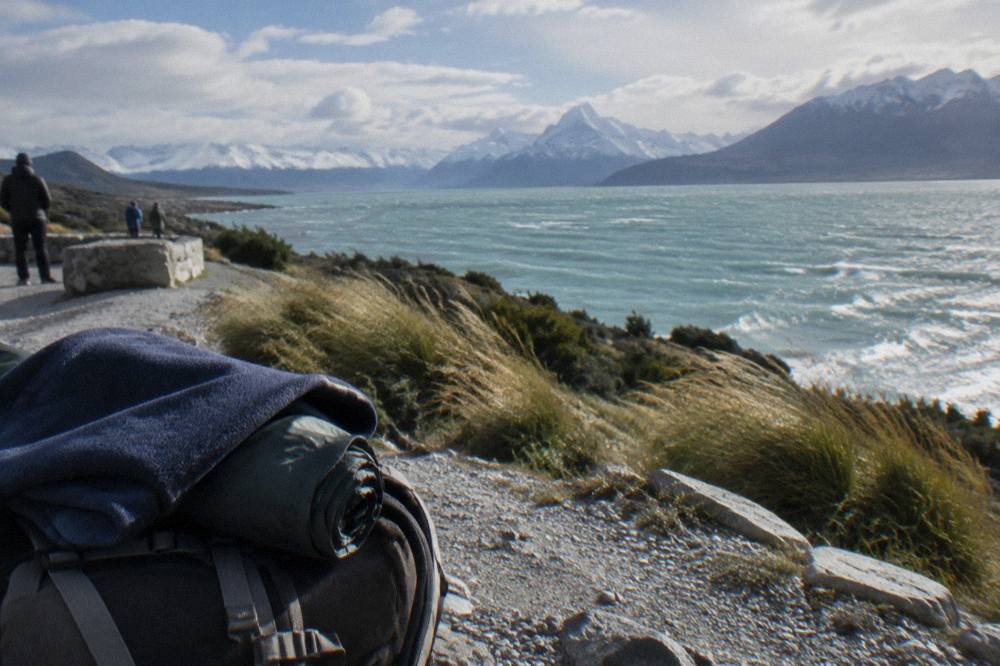
Footwear deserves its own paragraph. The Tasman Glacier View Track involves 300-plus steps on a short, steep climb, and the boat trip's access track, covered below, is 1.5 km of uneven surface with loose rock. Sneakers with decent tread will do for the viewpoint walks; sandals, dress shoes and new unbroken boots will not. The operator's own advice for the boat trip is sturdy walking shoes, and the same standard makes sense for any walk in the park. Socks matter more than people expect: one spare pair, dry, transforms a wet afternoon.
| Layer | What it is | Why it earns its space |
|---|---|---|
| Base | Merino or synthetic long sleeve | Warm when static on the bus, breathes on the climbs |
| Mid | Fleece or light insulated jacket | The main warmth layer at the viewpoints |
| Shell | Waterproof, windproof jacket | Rain, sleet and the constant wind off the ice |
| Extremities | Warm hat and light gloves | Small, light, and the difference at the lake shore |
| Legs | Long trousers, or trousers over shorts | Wind and UV on open moraine ground |
Sunglasses and sunscreen belong with the clothing, not as an afterthought. UV intensifies with altitude and bounces off snow, ice and grey rock, and a full day of it does more sun damage than most visitors expect. The operator lists sunglasses and sunscreen as recommended kit for the boat trip, and the same applies to every lookout in the park. Lip balm with SPF is the single most forgotten item in the bag.
What Should You Wear For The Tasman Glacier Boat Trip?
If the day trip's free time is being used for the Glacier Explorers boat trip, add warm layers even in summer, and wear the sturdiest shoes in the bag: the access walk is 1.5 km each way through the National Park on a track with small hills, uneven surface, loose rocks and a relatively steep slope down to the lake, and it has to be covered in about 25 minutes each direction. The operator's what-to-wear guidance is warm layers, sturdy walking shoes for uneven terrain, and a waterproof jacket, with sunglasses and sunscreen recommended. Additional equipment is provided where required by the operator.
The boat deserves a full packing sub-list because its rules are stricter than the walks. The trip runs about 2 hours 45 minutes in total, including transfers, the alpine walk and around one hour on the lake, and check-in is 30 minutes before departure at the Activities Centre on the ground floor of the Hermitage Hotel. The lake edge is cold air over ice water, conditions on the water feel sharper than in the village, and the walk back up from the jetty is where legs and lungs notice the altitude. Dress as for a hill walk in changeable weather and the packing is right.
One point that matters for planning, and which the Tasman Glacier Boat Tour guide covers in detail: no day trip includes the boat. It is booked separately, directly with the operator, by phone or email, and its 195 minutes on paper has to be checked against the day trip's free time before anything is packed or promised. Details and current operator prices, from NZ$219 adult and from NZ$99 child, are on the operator's page. A fuller packing breakdown for the water side of the day is in what to wear on the Tasman Glacier boat tour.
Age is a packing-adjacent detail: the minimum age for the boat is 4 years, a 3-year-old cannot go, and the operator describes the trip as suitable for families. For children old enough, the same layering list applies in smaller sizes, with the shoes the strictest item, since the 25-minute walking rule applies to every guest regardless of age.
Do You Need To Bring Lunch And Water?
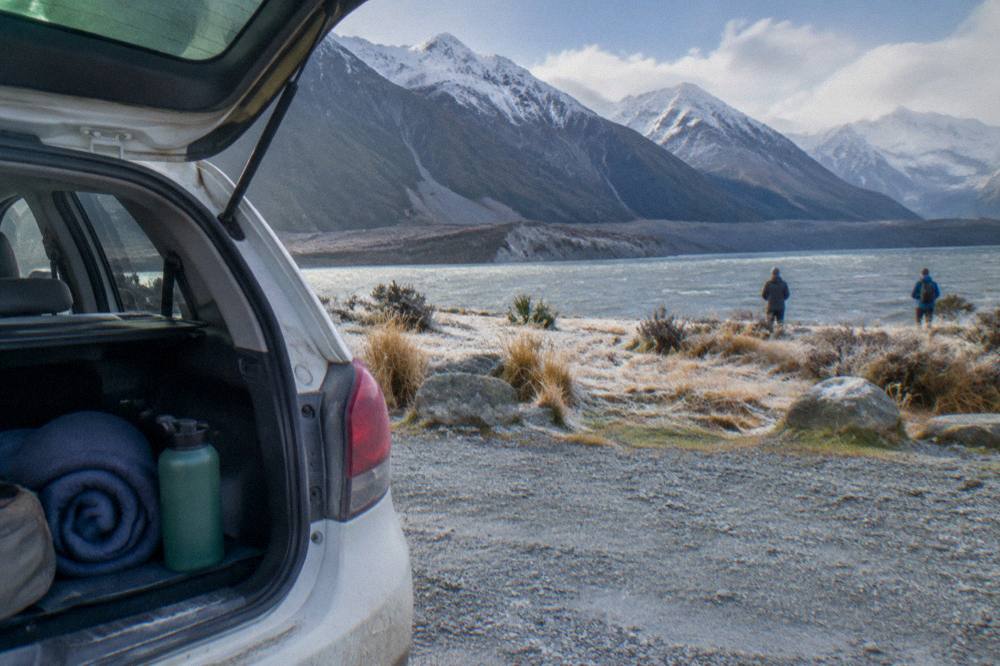
Most Christchurch day trips include lunch and provide bottled water and snacks, so the honest answer is: check the inclusion list before packing food, and always carry a water bottle anyway. The four most reviewed Christchurch tours all include lunch, while Queenstown small-group tours generally exclude food and the Tekapo shuttle excludes lunch entirely. The pattern is not uniform, and assuming lunch is included is how people end up hungry at 2pm with the nearest full supermarket an hour away in Twizel.
The details come straight from the operators' own inclusion lists. The most reviewed day trip from Christchurch, rated 4.8 across 658 reviews and from $144 per person, includes lunch with a chicken or vegetarian choice made at booking, plus bottled water, light snacks and Wi-Fi on board. The Cheeky Kea 13-hour tour from Christchurch, from $152 and rated 4.7 across 467 reviews, includes a pre-ordered picnic lunch from a local bakery, water and Kiwi snacks. The Cheeky Kiwi small-group tour with lunch, from $169.83 and rated 4.8 across 252 reviews, includes lunch with dietary requirements advised at booking.
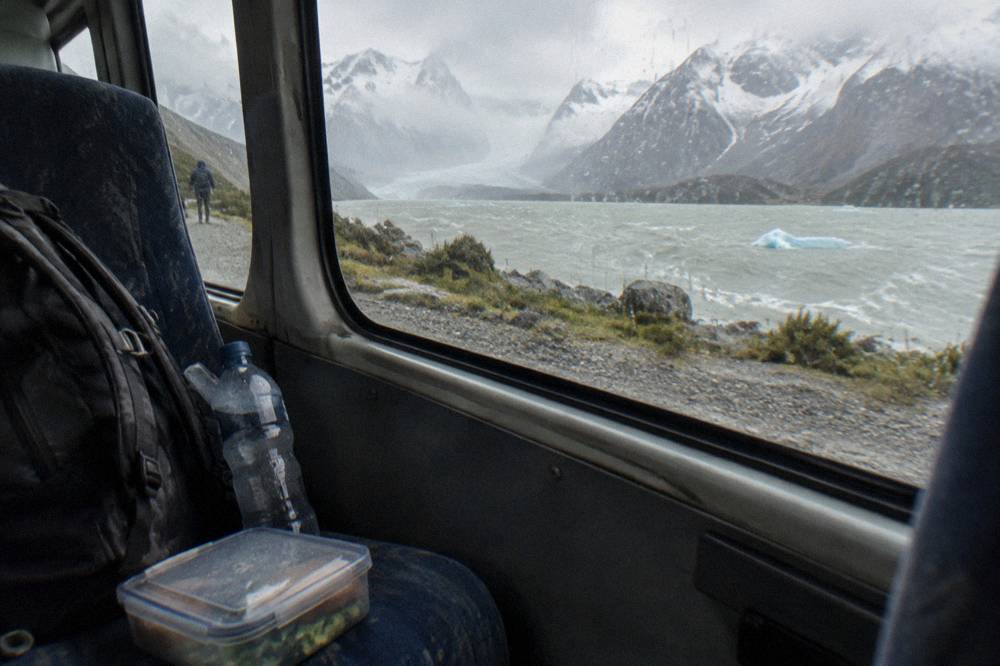
Queenstown and Tekapo departures flip the answer. The Queenstown small-group scenic tour, from $160 and rated 4.7 across 310 reviews, excludes food but gives 210 minutes of free time in the village, the longest of any tour covered here, which is enough for a cafe meal if queues cooperate. The Tekapo shuttle, from $94 and rated 4.8 across 441 reviews, provides water, snacks, Wi-Fi and even snow spikes in winter, but no lunch. A related question, how much free time each tour actually allows at Mount Cook, is unpacked in how much time you get at Mount Cook on a day tour.
| Departure city | Food situation | Extra food to pack |
|---|---|---|
| Christchurch (lunch-included tours) | Lunch, water and snacks provided | Nothing essential; a backup bar is sensible |
| Queenstown | Food usually not included; 210 minutes free time on one tour | Lunch or cafe budget, snacks |
| Lake Tekapo (5-hour tour) | Lunch, water and snacks provided | Nothing essential |
| Lake Tekapo (shuttle) | Water and snacks only, no lunch | Full lunch plus snacks |
| Wanaka | Lunch, water and Kiwi snacks provided | Nothing essential |
Water is worth a sentence of its own. Bottled water comes with most tours, but a personal bottle of one litre or more is still the better tool for the walks, where taps are limited to the village and the car park toilet block, which DOC notes can close in winter. Dehydration at altitude hides behind the cold; people drink far less than they need when the wind is chilly and the day is long. The full index of guides sits on Tasman Glacier Boat Tour.
What Else Belongs In The Bag?
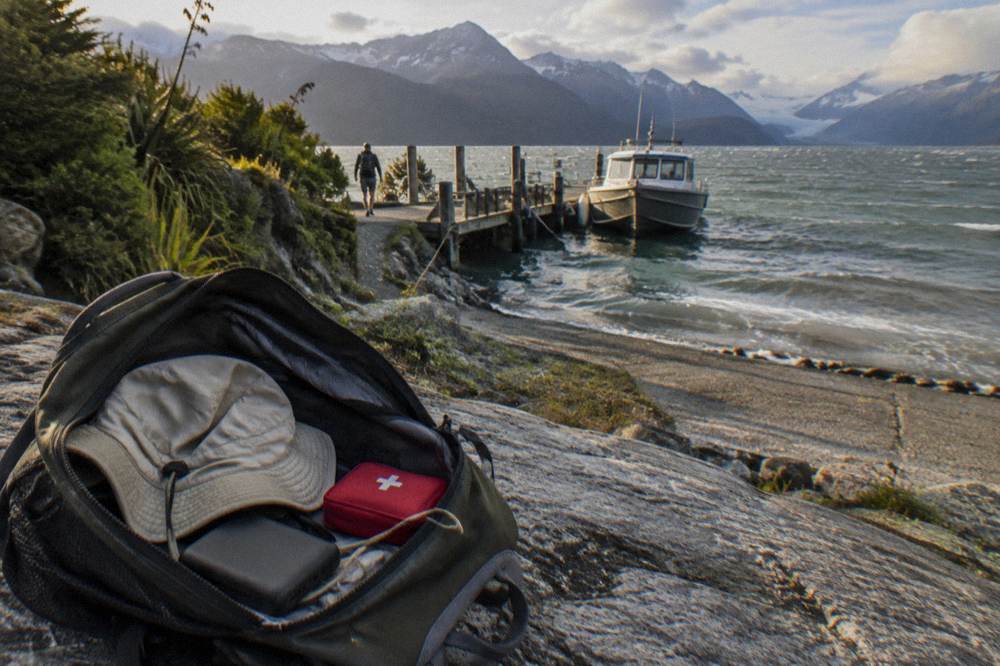
Beyond clothes and food, the shortlist is a sun hat or warm hat depending on season, sunscreen and lip balm, a small first-aid kit with blister plasters, a phone power bank, a rubbish bag for wet gear, and cash or card for cafe stops and the village's card-only self-service fuel pump if driving. A camera and binoculars are optional; the views are wide enough that a phone handles most of them. None of this is exotic. All of it is the difference between a comfortable 13 hours and an endurance event.
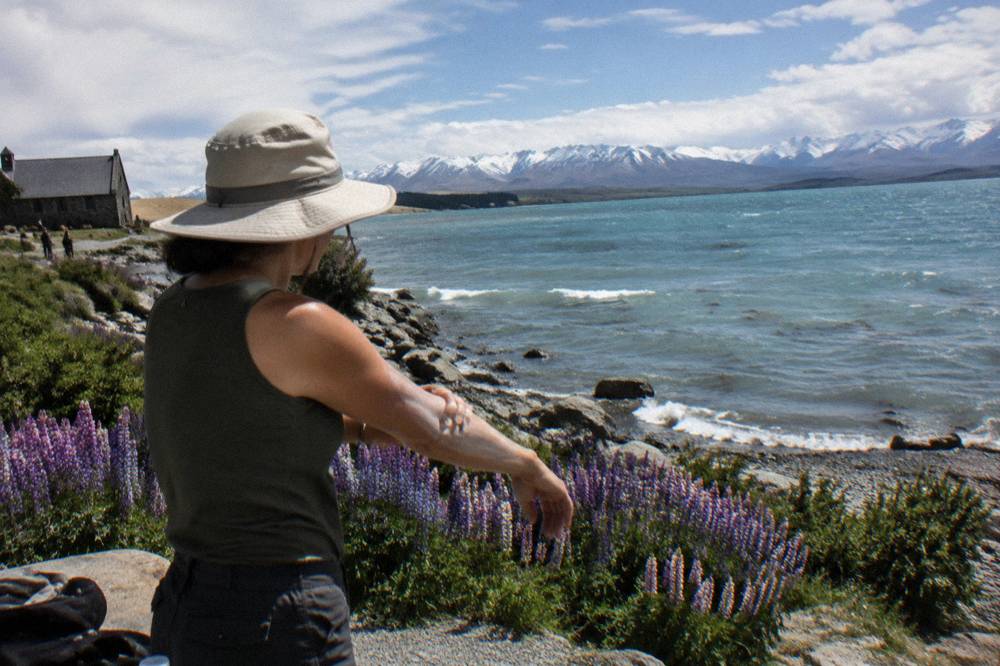
Blister plasters earn specific mention because of the steps. The Tasman Glacier View Track's 300-plus steps and the boat's access track both punish thin socks and new shoes, and a plaster applied at the first hot spot saves the rest of the day. A basic kit also covers headache tablets, since the combination of altitude, wind glare and a long bus day produces them reliably. Personal medication should ride in the daypack, not the hold luggage, for anyone on a one-way tour where bags travel separately.
Power and connectivity: most tours advertise Wi-Fi on board, and the Hermitage FAQ notes 4G reaches the park but can vary, so a charged power bank is the reliable answer for photos, maps and the live webcam of the mountain and lake, which is worth a look on the drive in to see what the cloud is doing. A dry bag or simple plastic liner keeps spare layers dry if the weather turns; cheap insurance given the refund policy does not extend to soaked fleece.
Season tilts the list. From November to April, DOC warns the Tasman Valley car park is very busy and tour groups crowd the tracks, so sun protection and patience top the list. From June to September, snow can close access roads and the car park toilets shut, so the warm layers move from sensible to non-negotiable, and traction devices matter only for independent walkers, since the Tekapo shuttle supplies snow spikes when snowy. Winter travellers should also read the road and season notes in a Mount Cook day trip in winter.
For anyone pairing the day trip with the boat trip, two caveats shape the bag. First, the boat can be cancelled for weather and lake conditions, decided by the Head Guide just before each trip, so the bag should serve a no-boat day too, and the terms should be checked when booking. Second, winter lake ice can close the boat, so check winter dates with the operator (see the season guide at /guides/tasman-glacier-boat-tour-season-and-times/) before the itinerary is built. The full weather picture, including the day-trip side of it, is in Mount Cook weather for day trips.
That Queenstown tour is the one case where the packing question changes shape rather than just contents: with 210 minutes of free time at the village, it is the only tour whose schedule on paper can absorb the boat's 195 minutes, and even then the timing has to be checked with both the day tour operator and the boat operator before relying on it. Its inclusions list also covers admission to the Sir Edmund Hillary Alpine Centre, which is a wet-weather use of a cancelled afternoon worth knowing about when packing.
How Big Should The Bag Be?
A 20 to 30 litre daypack is the right size for one person on any tour covered here: it swallows three layers, a water bottle, lunch if needed and the small kit, and it fits in a minibus footwell or overhead shelf. Wheeled suitcases belong in the hold, not on the walks, and anyone taking a one-way tour should check luggage allowances, which one operator caps at one large and one small bag per person. The two one-way transfers covered here, Christchurch to Queenstown and Queenstown to Tekapo, are luggage-moving tours, not return day trips, and pack differently again.
“Awesome day. Guide was knowledgeable and accommodating, and added a personal touch with a stop at his local market which was fun to experience.”
The reason to keep it small is the walking, not the bus. Everything in the bag has to be either worn or carried for the 25-minute track to the lake, the 30-minute return viewpoint climb, or an hour of village wandering, and every kilogram shows. A bag that zips closed also matters on the open lookouts at Lake Pukaki and Lake Tekapo, where wind tests every closure. Trekking poles are unnecessary for the day-trip walks; the viewpoint track's steps and the boat track's slope are short enough that legs manage, and the poles mostly become bus clutter.
A final note on what not to pack: a spare pair of shoes for after the walks is a small luxury, and one that only really works on the private tours, whose roomier vehicles can hold the extra bag. The best-packed bag for a Mount Cook day is a modest one, filled for cold, wind, sun and steps, with room left for whatever the weather adds.
The Tekapo shuttle is the packing-light end of the spectrum: 8.5 hours, water and snacks supplied, snow spikes thrown in when the track is snowy, and a from price of $94 that leaves room in the budget for lunch at the village cafe. Like every other day trip, it does not include the boat, so the boat's kit list is a separate decision, made separately with the operator.
Common Questions About Packing For A Mount Cook Day Trip
What Should I Pack For A Mount Cook Day Trip?
Warm layers, sturdy walking shoes, a waterproof jacket, sunglasses, sunscreen, a hat, a water bottle and any lunch the tour does not include. A 20 to 30 litre daypack covers it. Check the tour's inclusion list first: most Christchurch departures provide lunch, water and snacks.
Do I Need Hiking Boots For The Tasman Glacier Walks?
Not full boots, but sturdy shoes with real tread, yes. The Tasman Glacier View Track has 300-plus steps and the boat's access track is 1.5 km of uneven, loose rock with a steep slope at the end. The operator's advice for the boat trip is sturdy walking shoes for uneven terrain.
Is Lunch Included On Mount Cook Day Tours?
Usually from Christchurch: the three most reviewed Christchurch tours all include lunch, water and snacks. Most Queenstown and Tekapo options do not include lunch, so pack food or budget for a cafe during the free time at the village.
What Should I Wear For The Glacier Explorers Boat Trip?
Warm layers and a waterproof jacket even in summer, plus sunglasses and sunscreen, per the operator's guidance. The trip includes a 1.5 km walk each way on an uneven track that must be covered in about 25 minutes each direction, so shoes are the strictest item. The boat is booked separately with the operator and is not part of any day trip.
How Cold Does It Get On A Mount Cook Day Trip?
Conditions vary and no temperature promise is safe, but the village sits in an alpine climate with fast-changing weather, and wind off the lake and glacier chills every month of the year. Layering, with a hat and gloves packed, handles the range.
Can Children Do The Walks And The Boat Trip?
The viewpoint walks suit children with steady footing, with an adult on the steps. The boat trip has a minimum age of 4 years, a 3-year-old cannot go, and the operator describes it as suitable for families; every guest, regardless of age, must manage the 25-minute access walk each way.