Tasman Glacier Icebergs: What You Can See From The Boat
Icebergs drift on a lake that did not exist until 1974. Here is what the ice on Tasman Lake actually is, what the boat trip can and cannot promise, and how to plan a day around it.
Short answer
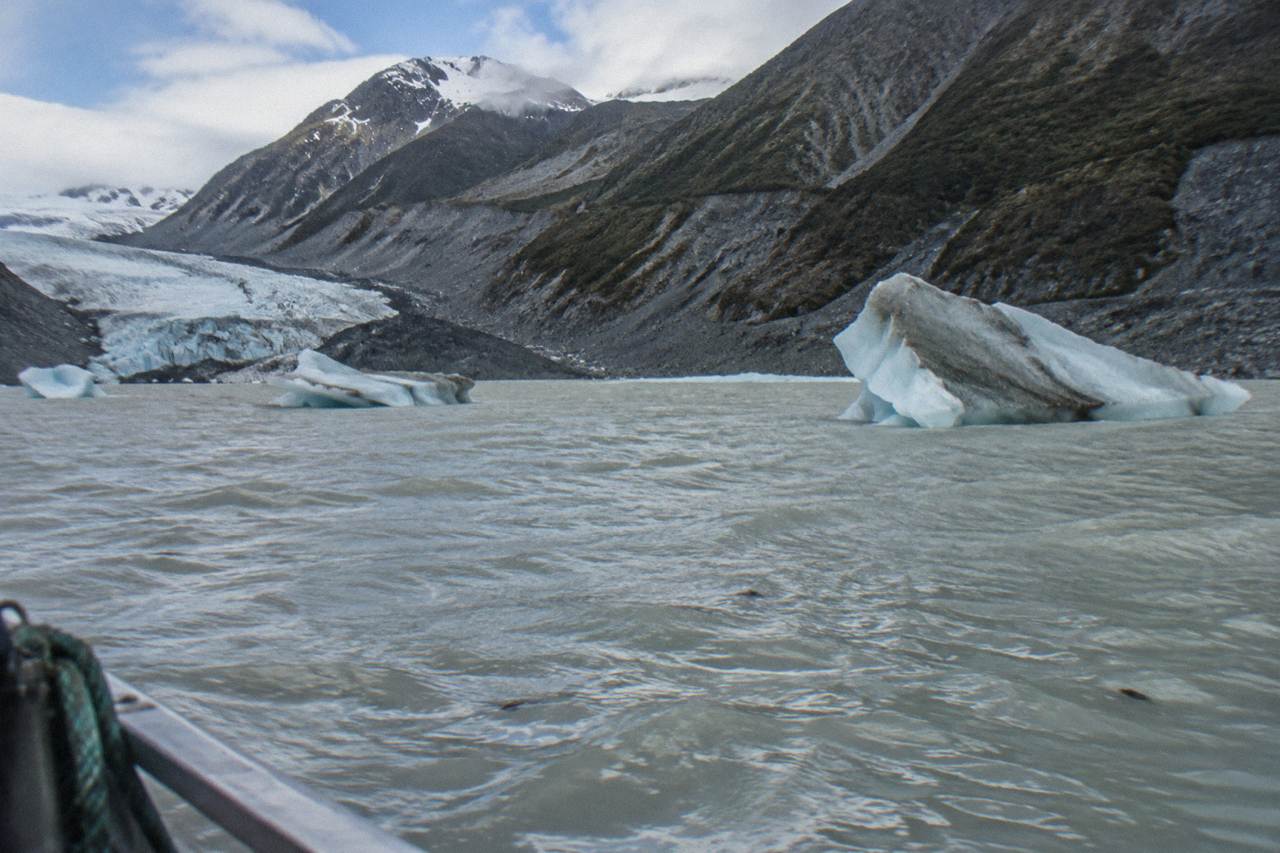
Tasman Glacier icebergs float on Tasman Lake, a lake DOC says did not exist until 1974 and is growing as the glacier melts. The Glacier Explorers boat spends about one hour on the lake, from NZ$219 adult with the operator, and the operator states plainly that icebergs, calvings and rollovers cannot be guaranteed.
Icebergs in the middle of the Southern Alps sound impossible, yet Tasman Lake carries them. The Department of Conservation records that Tasman Lake did not exist until 1974, and that it is growing rapidly as Tasman Glacier melts. Chunks of ice that break off the glacier terminal float on that young lake, drift with the wind, and melt slowly enough that a boat can move among them. That is the whole reason the boat trip exists, and it is also why the ice can never be promised on any given day.
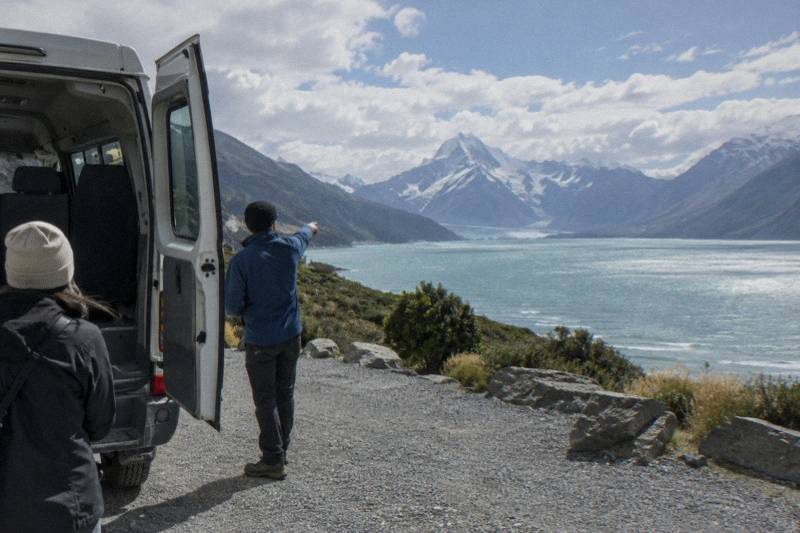
This guide covers what the icebergs are, what the boat trip actually does on the water, what the operator does and does not guarantee, how to see ice from shore without boarding, and how the day trips from Christchurch, Queenstown and Tekapo fit, or do not fit, around a boat departure. One thing to hold onto throughout: the boat is booked separately, directly with the operator, and no day trip includes it.
What Are The Icebergs On Tasman Lake?
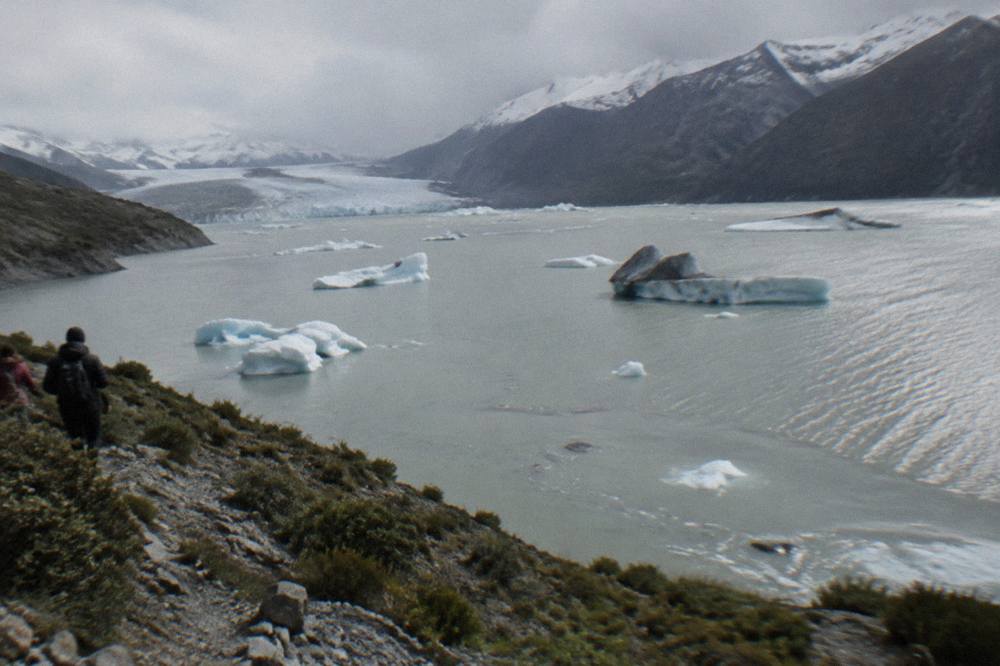
The icebergs on Tasman Lake are chunks of ice calved from the terminal face of the Tasman Glacier into the meltwater lake at its snout, varying in size and quantity, with numbers that shift as glacier activity changes. DOC records that Tasman Lake did not exist until 1974 and is growing rapidly as the glacier, New Zealand's longest at 23 km long and up to 3 km wide, melts.
That last point is the one most first-time visitors miss. The lake is younger than many of the people looking at it. As the glacier retreats, its meltwater pools against the terminal moraine, the ridge of rock the glacier pushed ahead of itself, and the pool becomes a lake. When the ice at the glacier's end fractures and drops into that water, the floating pieces are what everyone photographs.
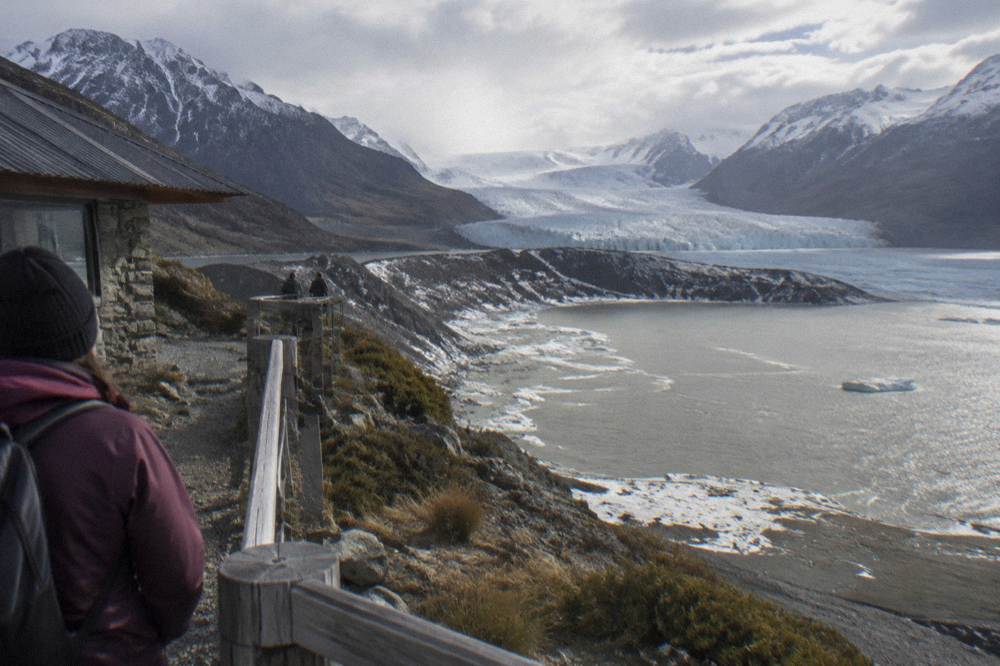
Not all of them look white. DOC notes that the lower reaches of the Tasman Glacier are rock-covered, so much of the ice arriving at the lake carries gravel and grit. Icebergs that have rolled, or that have melted unevenly, can show the dense blue of old glacial ice on one face and a grey rubble coat on another. The blue is compressed ice that has squeezed out most of its air bubbles over decades inside the glacier.
The quantity varies, and the operator is candid about this. The size and number of icebergs depend on glacier activity, on wind pushing the ice around the lake, and on how recently anything has calved. There is no calendar for it.
| Fact | Detail | Source |
|---|---|---|
| Tasman Glacier length | 23 km | DOC |
| Tasman Glacier width | Up to 3 km | DOC |
| Tasman Lake origin | Did not exist until 1974 | DOC |
| Why the lake grows | Glacier retreat and meltwater | DOC |
| Iceberg quantity | Varies with glacier activity | Operator |
| Lower glacier surface | Rock-covered | DOC |
For background on the retreat itself, and on why a glacier that calves icebergs is a glacier in trouble, the guide to Tasman Glacier retreat and the lake traces the full story with DOC's figures.
Where Does The Boat Go Among The Icebergs?
Glacier Explorers, operated by The Hermitage Hotel, runs the boat trip on Tasman Lake: check-in at the Activities Centre in the Hermitage 30 minutes before departure, a bus to the Tasman Valley, a 1.5 km walk each way, then about one hour on the lake among whatever ice is there that day. The whole experience runs about 2 hours 45 minutes, and adults pay from NZ$219 with the operator.
The shape of the trip matters for anyone hoping to stand beside an iceberg. After check-in at the Hermitage Hotel's ground-floor Activities Centre, the group is bused from the village into the Tasman Valley. From the Blue Lakes car park, guests walk 1.5 km each way, about 25 minutes, on a track the operator describes as having small hills, uneven surface, loose rocks and a relatively steep slope down to the lake at the end. Guests must be able to cover that walk in 25 minutes each way. It is a genuine alpine track, not a path to a jetty.
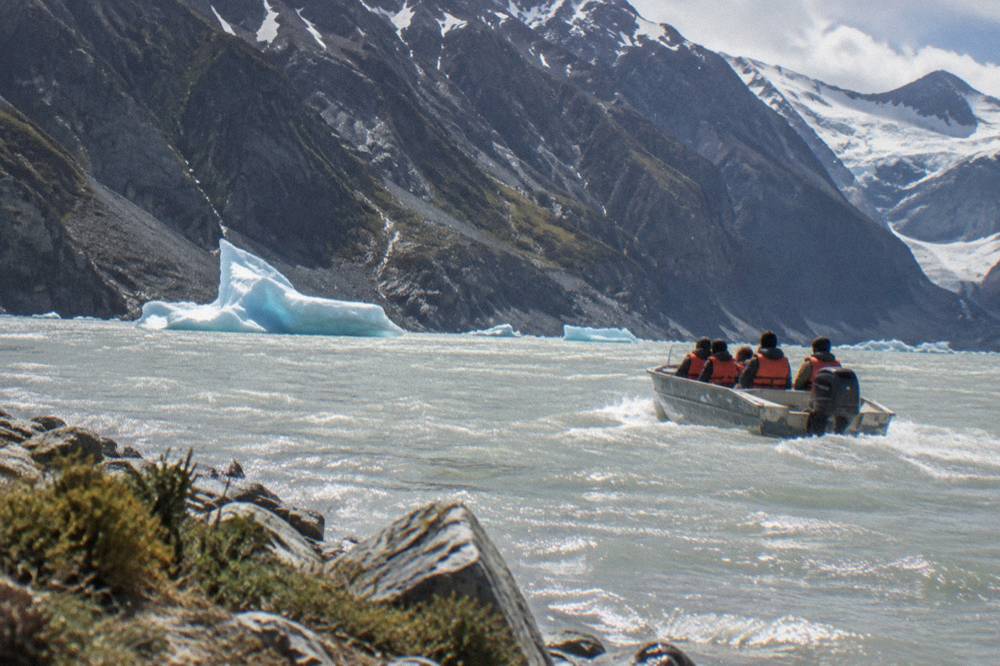
The lake time is about one hour. In that hour the boat moves among whatever ice is floating that day, and the ice that is floating that day is the scenery. The operator's own phrasing is careful: "Icebergs, calvings and rollovers cannot be guaranteed, but are a wonderful bonus." Conditions permitting, guides often retrieve glacier ice from the lake so passengers can see and handle it, which is part of the boat's roughly one hour on the lake.
Weather and lake conditions can cancel a departure. The Head Guide decides just before each trip, and the operator offers an alternative trip time or a full refund when a trip is cancelled for those reasons. Check the cancellation terms when booking. The full rundown of how cancellations work is in Tasman Glacier boat tour weather and cancellations.
Booking is direct only, by phone or email with the operator, which states that bookings are essential and recommends pre-booking because of demand. The operator's prices: adults aged 15 and over from NZ$219, children aged 4 to 14 from NZ$99, and a family pass for two adults and two children from NZ$576. Those are the operator's NZ-dollar prices and they can change; they are never bundled with anything else.
| Boat Trip Element | Detail |
|---|---|
| Operator | Glacier Explorers, run by The Hermitage Hotel |
| Check-in | Activities Centre, ground floor of the Hermitage Hotel, 30 minutes before departure |
| Walk | 1.5 km each way, about 25 minutes, uneven and steep in places |
| Time on the lake | About one hour |
| Total duration | About 2 hours 45 minutes including transfers and walk |
| Adult price | From NZ$219 (operator) |
| Child price | From NZ$99, ages 4 to 14 (operator) |
| Minimum age | 4 years |
The wider trip, including what to wear for the walk and the lake, is covered in the Glacier Explorers Tasman Lake boat trip guide.
Are Icebergs Guaranteed On The Tasman Glacier Boat Trip?
No. The operator states it directly: "Icebergs, calvings and rollovers cannot be guaranteed, but are a wonderful bonus." The boat trip guarantees the lake, the glacier landscape and about an hour on the water, not the ice. How much floating ice the lake carries, and how large the pieces are, depends on glacier activity, wind and recent calving, so it varies between trips.
That honesty is worth taking seriously rather than treating as legal fine print. Calving, the moment when ice breaks off the terminal face, is a sudden natural event that nobody schedules. A rollover, when a floating iceberg becomes unstable and flips, exposing fresh blue ice, is rarer still and spectacular when it happens. Passengers who witness either count themselves lucky, and the operators who run these trips do not pretend otherwise.
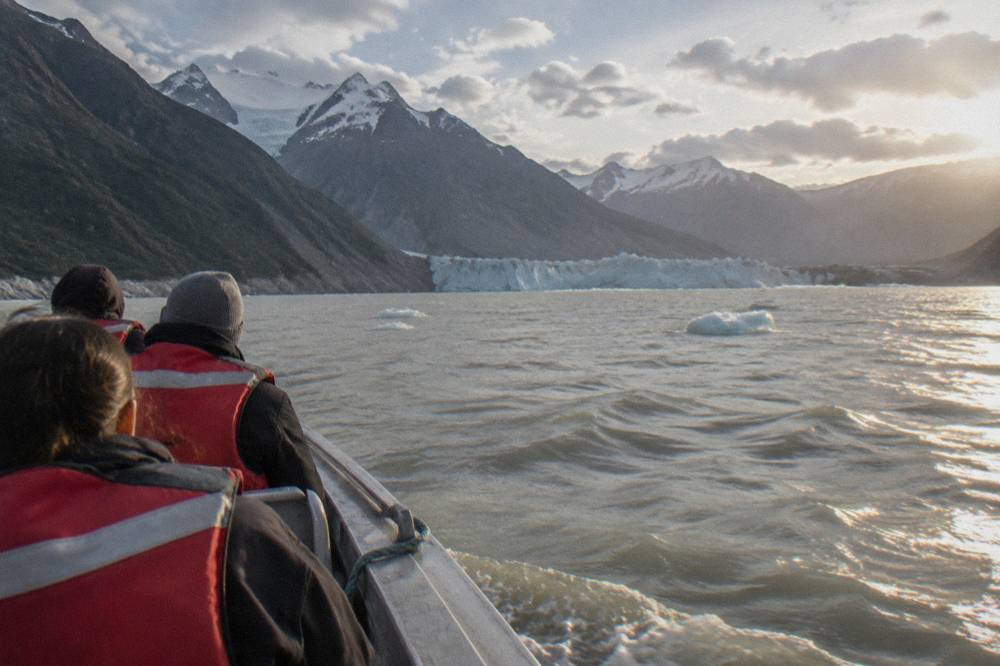
What the trip does deliver reliably is proximity to a landscape in fast change. The lake itself, the rock-mantled glacier tongue, the moraine walls and the distance to Aoraki / Mount Cook, at 3,724 m New Zealand's tallest peak, are all there regardless of the iceberg count. DOC also warns that Tasman Lake and its surrounding moraine walls have serious hazards beyond the viewpoint, which is exactly why independent exploration of the lake shore is not the plan; the boat, with its crew and its equipment, is the managed way onto the water.
If the decision in front of you is less about icebergs and more about simply getting to Aoraki / Mount Cook with a day to spare, the Christchurch day trips are a common route in, and the most reviewed of them, at 658 reviews with a 4.8 rating, runs from $144 per person with hotel pickup and lunch included. The trio below shows that trip beside two close alternatives from the same city.
One distinction that trips up a lot of readers: the Tasman Glacier viewpoint walk that several day trips offer is a lookout above the lake, not the boat. DOC's Tasman Glacier View Track runs 1.5 km return, about 30 minutes, up 300-plus steps to a viewpoint with views of Tasman Lake and the glacier at its far end, where, in DOC's words, there are "icebergs in summer and lake ice in winter". Seeing ice from that viewpoint is free and needs no booking. Standing beside it on the water needs the boat. The two are compared properly in Blue Lakes and the Tasman Glacier view walk.
Can You See Icebergs Without Taking The Boat?
Yes, from a distance. DOC's Tasman Glacier View Track, a 30-minute return climb of 300-plus steps from the free Tasman Valley car park, ends at a viewpoint over Tasman Lake where DOC notes icebergs in summer and lake ice in winter. The ice appears small from that height, and nothing replaces the boat's water-level hour, but it costs nothing and requires no booking.
The viewpoint route is short and steep rather than long. From the car park, steps lead about 10 minutes to the first of the Blue Lakes, then another 5 minutes up to the viewpoint. The Blue Lakes themselves are a curiosity: DOC notes they were once blue but are now fed by rainwater and look green, so do not arrive expecting the name to match the colour. For anyone for whom 300-plus steps do not suit, the Tasman Lake and River Track, 2.5 km and 50 minutes return, branches off the View Track and gives an alternative angle. Everything else covered here is indexed on Tasman Glacier Boat Tour.
Getting to the trailhead is straightforward. The Tasman Valley car park is about 10 minutes' drive from Aoraki / Mount Cook Village along State Highway 80 and Tasman Valley Road, past a one-way bridge, and DOC confirms parking there is free for cars and campervans. It fills in summer, November to April, when DOC warns large tour groups use the track, so an early or late start helps. Toilets at the car park close in winter and can be unavailable in summer; the nearest reliable facilities are at the Visitor Centre, 10 minutes away by car.
| Option | Effort | Time | Ice Experience | Cost |
|---|---|---|---|---|
| Boat trip (Glacier Explorers) | 1.5 km walk each way, 25 min each direction | About 2 h 45 min total | On the water among the ice, about 1 h on the lake | From NZ$219 adult, operator |
| Tasman Glacier View Track | 300+ steps, short steep climb | 30 min return | Icebergs seen from above, summer; lake ice in winter | Free |
| Tasman Lake and River Track | Gentle valley track | 50 min return, 2.5 km | Distant views along the lake outlet | Free |
If you're wondering whether the boat trip still leaves time for the Hooker Valley Track, the guide to fitting both walks into the same day works through the timings and booking caveats.
The trade-offs between the boat, the walks and a coach day trip are laid out side by side in Tasman Glacier tours: boat, walk or day trip.
Can You Combine The Icebergs With A Mount Cook Day Trip?
Only if the free time at Aoraki / Mount Cook covers roughly 195 minutes: 30 minutes of boat check-in plus the 2 hour 45 minute trip. No day trip includes the boat, and the boat is booked separately, directly with the operator. Among the trips covered here, only the Queenstown small-group tour with 210 minutes of free time leaves that much on paper, and even there the timing needs checking with both operators.
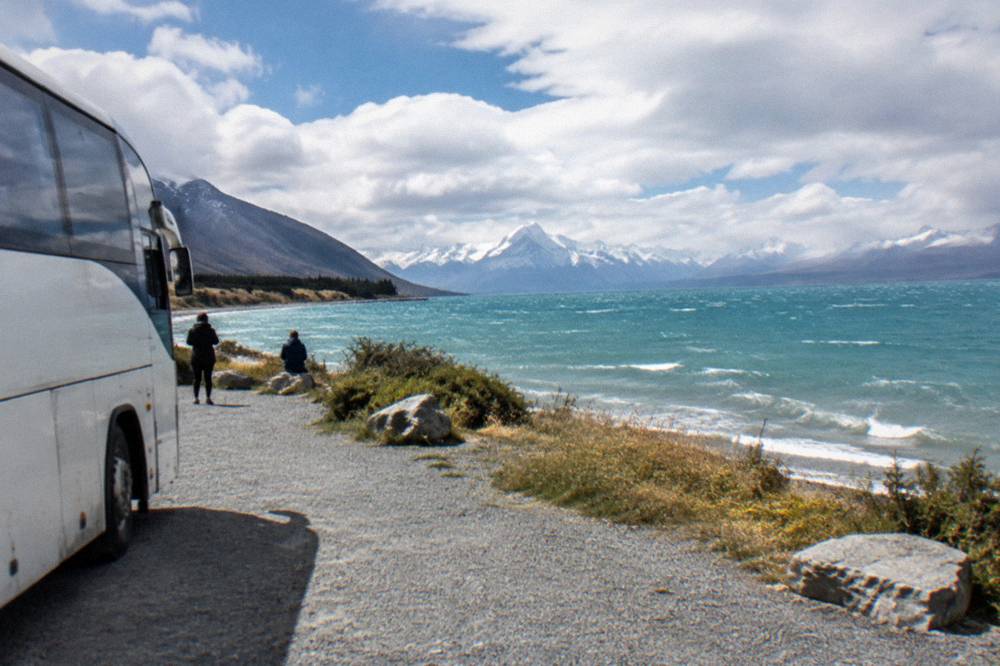
This is the single most common planning error, so it deserves plain numbers. The Christchurch day trips that state 150 minutes of free time at Mount Cook, and the Tekapo small-group trip with the same figure, and the Wanaka trip with 120 minutes, all fall short of the boat's paper requirement. A 150-minute window cannot absorb a 195-minute boat experience plus the transfer between the village and wherever the day trip's guide expects the group to regroup. Saying a day trip "gets you to the boat" would simply be false for those schedules.
The honest options are three. Stay a night at or near the village and take the boat on a full day, covered in where to stay near Mount Cook for the boat trip. Take the Queenstown small-group tour, from $160 per person, rated 4.7 across 310 reviews, which gives 210 minutes of free time at Mount Cook Village and names the boat as an optional activity for that free time, then verify the day's boat departure times against the tour's schedule with both operators before booking either. Or treat the day trip and the boat as separate trips on separate days.
From Lake Tekapo the arithmetic is different because the drives are short: DOC puts Tekapo about 1 hour 30 minutes from the Tasman Valley car park, and the Tekapo Shuttle day tour, from $94 per person and rated 4.8 across 441 reviews, includes the Tasman Glacier viewpoint walk, so ice from above is part of its day.
The carbon-neutral small-group tour from Tekapo, from $152 per person with lunch included and 150 minutes of free time at Mount Cook, fits the same caveat as the Christchurch trips: 150 minutes does not cover the boat's 195-minute requirement.
| Day Trip | Start City | Free Time At Mount Cook | Fits The Boat On Paper? |
|---|---|---|---|
| Small group scenic Mt Cook tour, from $160 | Queenstown | 210 minutes | Yes, on paper; confirm times with both operators |
| Mount Cook & Lake Tekapo tour, from $144 | Christchurch | 150 minutes | No, the boat needs about 195 minutes |
| Mount Cook & Lake Tekapo tour with lunch, from $152 | Christchurch | 150 minutes | No |
| Carbon neutral Mt Cook tour, from $152 | Lake Tekapo | 150 minutes | No |
| Mt Cook day tour, from $139 | Wanaka | 120 minutes | No |
The fuller comparison, including every trip and its stated figures, is in which Mount Cook day trip leaves time for the boat.
What Does Seeing The Icebergs Cost?
The boat trip costs from NZ$219 for an adult and from NZ$99 for a child aged 4 to 14, booked directly with the operator, with a family pass from NZ$576. Seeing ice from the viewpoint is free. Day trips that reach the Tasman valley run from $94 per person from Tekapo, $139 from Wanaka, $144 from Christchurch and $150.52 from Queenstown, in USD per person, and none of them includes the boat.
The two price systems never mix, and any article that adds them together is guessing. The boat's NZ-dollar prices are the operator's, published on the operator's own page, and they are from-prices that can change. Day-trip prices are USD per person from the booking pages, and the cheapest and dearest claims worth making come from the well-reviewed end of the scale: at the low end among well-reviewed trips, the Tekapo Shuttle at $94, rated 4.8 across 441 reviews; the most reviewed trip of all is the Christchurch Mount Cook and Lake Tekapo day tour, 658 reviews and a 4.8 rating, from $144.
There are also quiet costs worth knowing. The Tasman Valley car park is free, but the village has no shops or convenience stores, the Hermitage's FAQ notes a card-only self-service fuel pump and advises filling up before arriving, and DOC points out the nearest supermarkets are Twizel, an hour away, and Tekapo, 1 hour 30 minutes. A day built around icebergs usually involves buying lunch somewhere, so a tour with lunch included, like the Christchurch trips from $144 and $152, removes one moving part.
| Way To See The Ice | Price | What It Includes |
|---|---|---|
| Tasman Glacier View Track | Free | Walk-up viewpoint, 30 min return |
| Glacier Explorers boat | From NZ$219 adult, from NZ$99 child (operator) | Transfers, the 1.5 km walk each way, about 1 h on the lake |
| Christchurch day tour, most reviewed | From $144 per person | Hotel pickup, lunch, 150 min at Mount Cook, viewpoint walk |
| Queenstown small-group day tour | From $160 per person | Pickup, 210 min free time, Alpine Centre admission |
| Tekapo Shuttle day tour | From $94 per person | Transport, viewpoint walk, snacks |
For the full price landscape across every start city, see Mount Cook day tour prices.
When Does The Lake Carry The Most Ice?
DOC's own wording from the viewpoint is that there are icebergs in summer and lake ice in winter, and the operator does not publish an iceberg forecast for any month. Winter lake ice can close the boat, so check winter dates with the operator before planning the trip; the season guide covers the detail.
The honest version of the seasonal story is that nobody can book a guaranteed iceberg. Calving is sporadic, ice melts and drifts, and a strong wind can bunch the ice at one end of the lake or scatter it. What can be said is structural: the lake grows as the glacier retreats, so the supply of ice continues, and the Head Guide makes the weather call just before each trip, with a full refund or reschedule if the operator cancels for weather.
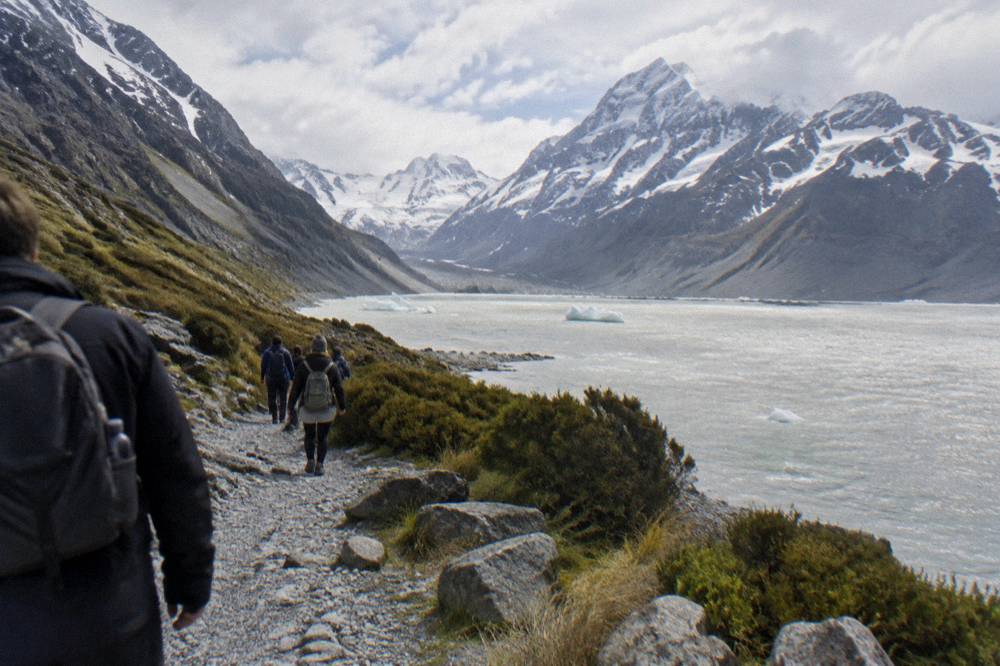
Practical planning beats iceberg forecasting. Book the boat early, because the operator says bookings are essential. Check the live webcam the Hermitage publishes before heading to the valley, and check the road, since snow can close State Highway 80 and DOC notes access may be limited from June to September. A night in the village, rather than a day trip out and back, gives a fallback departure if the first is cancelled for weather, with an alternative trip time or a full refund offered in those cases.
Layer for the lake whatever the season. The operator recommends warm layers, sturdy walking shoes for the uneven track, a waterproof jacket, sunglasses and sunscreen, and states that additional equipment is provided where required. Midsummer sun on snow and ice glare hard; a winter-adjacent spring trip can feel alpine at the shoreline even when Twizel is mild. The packing detail, item by item, is in what to wear on the Tasman Glacier boat tour.
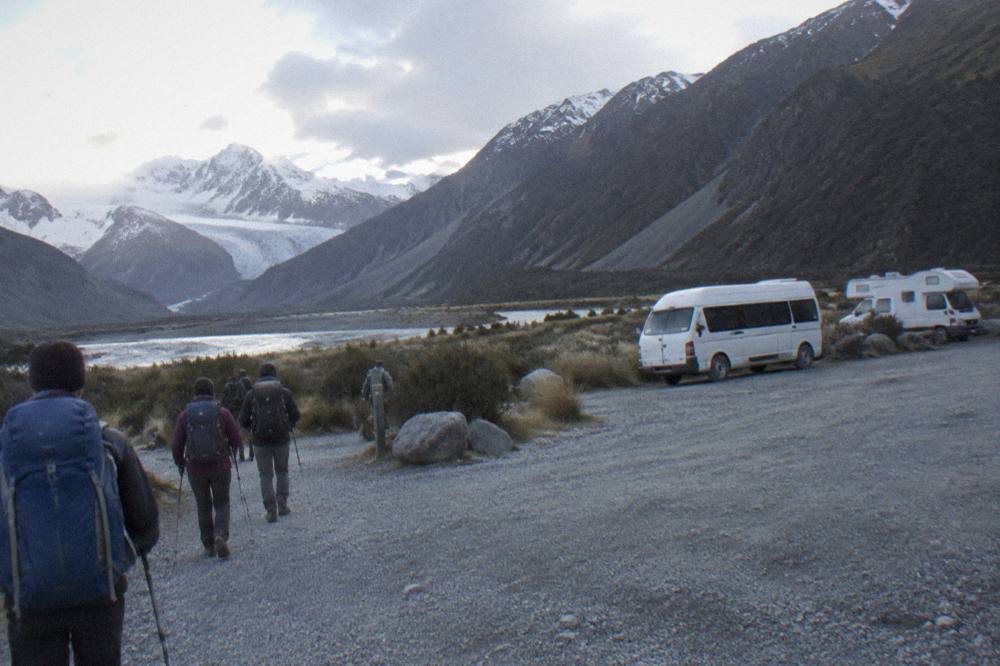
Aoraki / Mount Cook, at 3,724 m the country's tallest peak, sits above all of this, and the same weather that hides it can cancel the boat. Cloud decisions are covered in will I see Mount Cook on a day tour if it is cloudy, and the boat's own terms are on the operator's page for Glacier Explorers at the operator's page. DOC's park guide, at Aoraki / Mount Cook National Park, is the reference for road conditions and track alerts, and the view track detail sits on DOC's Tasman Glacier View Track page.
Common Questions About Tasman Glacier Icebergs
Are Icebergs Guaranteed On The Tasman Glacier Boat Trip?
No. The operator states: "Icebergs, calvings and rollovers cannot be guaranteed, but are a wonderful bonus." The quantity and size of floating ice vary with glacier activity, wind and recent calving, and no departure can promise any of the three.
Can You See Tasman Glacier Icebergs Without Taking The Boat?
Yes, from the Tasman Glacier View Track viewpoint above the lake. DOC notes icebergs in summer and lake ice in winter from that lookout. The walk is 1.5 km return, about 30 minutes, with 300-plus steps, from the free Tasman Valley car park.
Does A Mount Cook Day Trip Include The Glacier Explorers Boat?
No day trip includes the boat. The boat is booked separately, directly with the operator by phone or email, and its about 2 hour 45 minute trip plus 30 minute check-in must be checked against any day trip's free time. Only one Queenstown tour, with 210 minutes of free time, leaves that much on paper.
How Old Are The Icebergs On Tasman Lake?
The ice itself is compressed glacial ice, but the lake is young. DOC records that Tasman Lake did not exist until 1974 and is growing rapidly as Tasman Glacier retreats and melts.
How Close Does The Boat Get To The Icebergs?
The boat spends about one hour on the lake among the ice present that day, and conditions permitting guides often retrieve glacier ice so passengers can see and handle it. The operator promises no close approach to the terminal face, and calving cannot be scheduled.
Why Are Some Icebergs Blue And Some Grey?
Compressed glacial ice that has lost most of its air bubbles appears dense blue, often on a rolled or freshly fractured face. DOC notes the lower Tasman Glacier is rock-covered, so much arriving ice carries grey gravel until it melts or turns over.